The Anatomy of Goodyear Welting: Why Sole Construction Dictates Shoe Longevity
The Hidden Architecture Beneath Your Soles
From a distance, a well-made shoe can appear to be a simple arrangement of polished leather, a handsome last, and a clean sole edge. The real difference between disposable footwear and an enduring pair, however, lies beneath the visible surface. Fast-fashion shoes are often assembled to satisfy a short cycle of wear, trend, and replacement. Properly constructed footwear is designed with a longer conversation in mind, one that includes maintenance, repair, adaptation, and eventually a second or third life.
That longevity is not determined by the upper alone, even when the leather is excellent. A supple calfskin upper can outlast its original sole, but only if the construction allows the worn components to be removed without destroying the shoe. Goodyear welting has become the benchmark because it separates the structural elements, protects the foot chamber, and makes repeated resoling possible. The result is more than durability. Over time, the shoe acquires a personal patina, a softened profile, and a fit shaped by the anatomy and habits of its wearer.
Deconstructing the Goodyear Welt Anatomy
A Goodyear-welted shoe is best understood as a layered system rather than a single object. The upper is drawn over the last, the insole provides the foundation beneath the foot, and a welt strip runs around the perimeter. Between the insole and outsole sits a filling, usually cork, which creates cushioning while allowing the shoe to develop its own internal geography. The outsole, meanwhile, is a replaceable wear layer rather than the permanent foundation of the shoe.
- Insole rib or gemming provides the raised surface to which the upper and welt are secured.
- The welt strip joins the upper, insole structure, and outsole around the shoe”s edge.
- Cork footbed filler occupies the cavity beneath the foot and gradually conforms to its contours.
- The outsole absorbs contact with the ground and can be replaced when its tread or leather has worn thin.
The defining mechanical advantage is the double-stitch arrangement. One line secures the upper and welt to the insole rib, while another joins the welt to the outsole. Because the principal stitching does not pass directly through the entire foot chamber, the interior remains comparatively protected from water intrusion and uncomfortable thread exposure. The welt also creates a visible margin between the upper and sole, giving the shoe its characteristic substantial, deliberate profile.
The cork filling is central to the wearing experience. Under the pressure and warmth of regular use, it compresses gradually beneath the foot, creating a personalized impression rather than an anonymous factory surface. This is why a quality welted shoe may feel somewhat firm at first and increasingly natural after several months. The process is not instant comfort, but cultivated comfort. For a technical account of the mechanized process patented in the nineteenth century, the history of the Goodyear welt explains how the method changed footwear manufacturing.
Goodyear Welt Versus Blake Stitch Construction
Blake stitching, Goodyear welting, and cemented construction each reflect a different set of priorities. Blake construction typically uses a single line of stitching through the insole, upper, and outsole. The result is a slim, lightweight shoe with a close-fitting sole edge and immediate flexibility. Cemented shoes rely primarily on adhesive, which can create an elegant silhouette and a light feel, but generally makes later reconstruction more difficult and sometimes impossible.
| Construction | Strengths | Trade-offs |
|---|---|---|
| Blake stitch | Light, flexible, slim profile, refined Italian silhouette | Stitching is more exposed to moisture and wear; resoling needs specialist equipment |
| Goodyear welt | Reparable, durable, comparatively water resistant, suitable for repeated resoling | More substantial profile, firmer break-in, slightly less immediate flexibility |
| Cemented sole | Lightweight, versatile, often affordable, clean visual lines | Limited recrafting potential and greater dependence on adhesive integrity |
An Italian Blake-stitched loafer or Oxford makes excellent sense when a sleek silhouette, lightness, and flexible movement matter most. It is particularly well suited to formal indoor use, dry climates, and wardrobes built around refined minimalism. A welted English shoe becomes indispensable when the brief includes wet pavements, frequent wear, country conditions, or the expectation that the shoe will be resoled repeatedly. Neither method is universally superior. The discerning choice depends on whether elegance is being defined by delicacy or by endurance.
The Recrafting Cycle and Preserving Acquired Patina
Resoling is the moment when Goodyear construction proves its long-term value. Once the outsole has worn through its useful thickness, a skilled cobbler can remove it while preserving the upper, welt, and much of the shoe”s internal structure. The replacement sole restores protection without erasing the leather that has already adapted to the wearer. Creases, burnishing, softened quarters, and small marks of use remain part of the shoe”s identity.
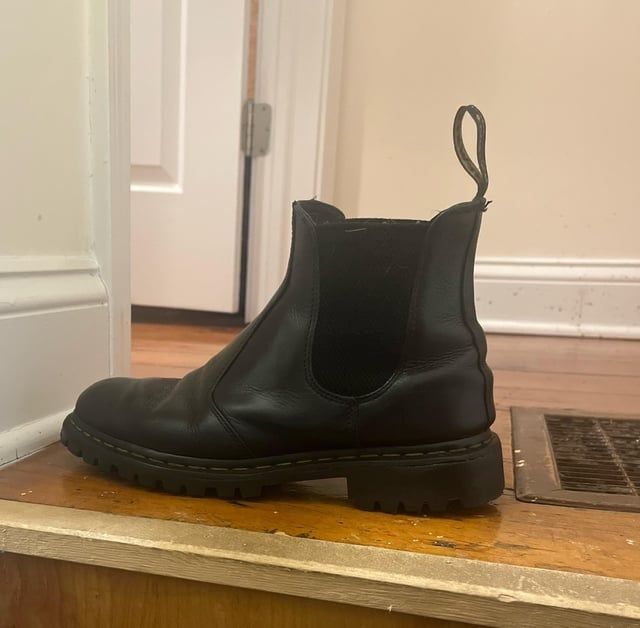
This distinction matters because leather changes with wear. A new pair may possess immaculate grain and precise finishing, but an older pair carries evidence of movement, climate, and personal habits. Restoration therefore becomes an intentional alternative to disposable apparel culture. It values continuity over novelty, provided that the upper remains structurally sound and the shoe has been maintained before damage reaches the welt or lasting margins.
A full factory refurbishment can go further than a straightforward resole. Some makers return the shoes to their original lasts, remove the old heels and soles, replace or repair the welt, and rebuild the bottom before cleaning and polishing the finished pair. This preserves the proportions established during the original making process and reduces the risk of distortion. Comparable restoration thinking has also reached premium casual footwear, as discussed in essays on sneaker restoration and continuation rather than simple replacement.
Essential Habits to Extend Welt and Leather Life
Even the best construction requires disciplined care. Moisture is one of the chief enemies of leather footwear because it weakens fibers, encourages deformation, and can accelerate deterioration around stitching. A welted shoe is more resistant to wet conditions than many alternatives, but water resistance is not the same as waterproofing. Shoes should be allowed to dry naturally, away from direct heat, before returning to service.
- Use cedar shoe trees. Insert them after wear to absorb residual moisture, support the vamp, and reduce deep creasing. Cedar trees should fit firmly without forcing the shoe out of shape.
- Rotate pairs sensibly. Giving a shoe at least a full day, and preferably longer after heavy wear, allows perspiration and moisture to dissipate. A rotation also reduces repetitive stress on the same flex points.
- Condition with restraint. Apply a suitable leather conditioner periodically, especially when the leather begins to feel dry. Excess product can soften structure and attract dirt, so light applications are preferable to saturation.
- Maintain the welt edge and outsole. Keep the welt clean, nourish exposed leather edges when appropriate, and use suitable sole dressing on leather soles. Avoid coating stitching with heavy waxes that can obscure wear and complicate repairs.
- Visit the cobbler early. Replace worn heel lifts and add protective work before the outsole reaches the welt. Once the welt itself is heavily abraded, repair becomes more complex, more expensive, and potentially less faithful to the original construction.
The precise timing of a resole depends on walking patterns, climate, sole material, and the shoe”s intended use. A visible channel, thinning beneath the ball of the foot, exposed stitching, or persistent dampness inside the shoe are all warnings rather than invitations to postpone action. Regular inspections are especially important for shoes worn in rain or on abrasive urban surfaces.
Curate Footwear Built for Decades Rather Than Seasons
Goodyear welting changes the arithmetic of a footwear purchase. The initial price represents not merely a finished product but a platform that can be maintained, renewed, and refined. When the upper is made from sound leather and the shoe is cared for intelligently, the cost is distributed across years of wear rather than concentrated in a short-lived season. A well-chosen pair of welted shoes can become one of the most dependable elements in a wardrobe.
There is also a quiet confidence in leather enriched by personal mileage. The softened instep, the measured creasing, and the polished edges tell a more compelling story than permanent newness. Demanding transparent construction encourages better buying decisions and a more deliberate relationship with dressing. Choose the right last, inspect the welt, ask about future recrafting, and care for the shoes before they require rescue. The reward is footwear that does not simply accompany a life, but records it with increasing character.