
The Architecture of a Tweed Jacket: Why Heavy Wool Still Outperforms Modern Outerwear in the City
The Anatomy of Urban Armor
The modern city winter is an unforgiving test of outerwear. One moment brings a damp walk through a wind tunnel of concrete and glass; the next delivers a crowded subway carriage or overheated office. Many synthetic technical shells respond with impressive laboratory specifications but less convincing real-world manners. They can rustle with every movement, trap clammy warmth during indoor transitions, and project a visually sterile appearance that makes considered dressing feel like an afterthought.
A properly made tweed jacket belongs to another tradition. Tweed developed as sporting protection in the harsh landscapes of Scotland and northern England, where wind, rain, abrasion, and long hours outdoors demanded more than decoration. Its evolution into a metropolitan staple was not a retreat from function, but a refinement of it. A well-cut jacket, such as those discussed in this guide to the tweed sport coat, operates as soft architecture. It frames the body, regulates a personal microclimate, and offers weather resistance without surrendering elegance.
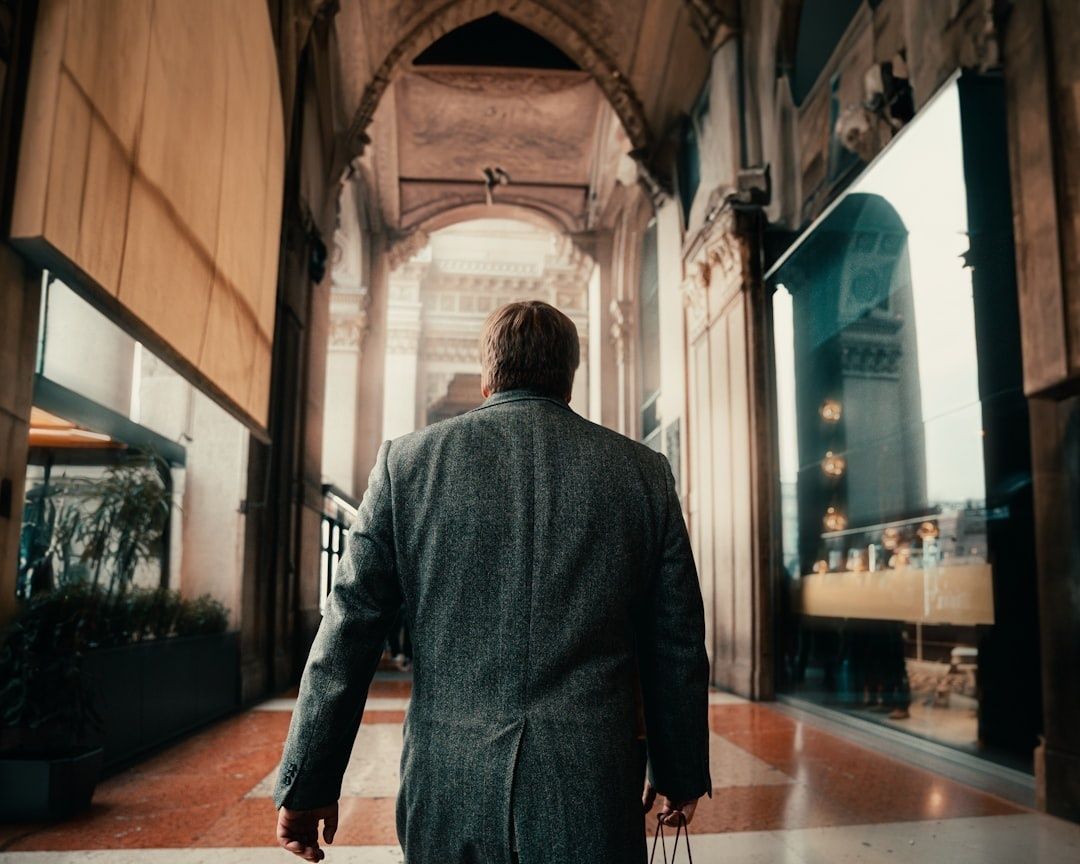
The Engineering of Natural Fiber
Heavy wool works because its performance is built into the fiber rather than merely applied as a surface treatment. Wool contains microscopic crimp, the natural waviness that creates millions of tiny air spaces. Those spaces slow the movement of heat, helping the fabric insulate without becoming rigid or excessively padded. Dense carded wool, especially when woven into a substantial tweed, also presents a compact surface that causes light precipitation to bead and run rather than immediately soak through.
Lanolin, the natural wax associated with sheep’s wool, contributes to wool’s traditional resistance to moisture and soil, although processing levels vary and no tweed should be treated as fully waterproof. The more important advantage is balance. Wool can absorb a degree of water vapour while continuing to feel comparatively comfortable, which matters when walking briskly, climbing stairs, or moving between frigid streets and warm interiors. Research and practical testing on wool base layers, including the comparisons summarized by merino wool and synthetics, consistently point to wool’s breathability, insulation when damp, and resistance to odour as key strengths.
| Performance consideration | Dense tweed | Synthetic shell |
|---|---|---|
| Warmth | Insulates through naturally crimped fibres and trapped air | Depends heavily on membrane, lining, and added insulation |
| Moisture management | Absorbs vapour and remains relatively comfortable across temperature changes | Often wicks or blocks moisture quickly, but can feel clammy when ventilation is limited |
| Odour | Naturally resists retained odour between wears | Can hold odour, particularly in polyester-rich fabrics |
| Noise and appearance | Quiet, textured, and visually tailored | May rustle and often communicates a distinctly technical aesthetic |
| Longevity | Can be repaired, brushed, and maintained for decades | Performance coatings and bonded components may degrade over time |
This does not make synthetics useless. A lightweight shell remains valuable during sustained rain, high-output cycling, or activities where rapid drying and minimal weight take priority. The distinction is that urban winter rarely presents one constant condition. Wool handles fluctuation with unusual grace. It helps prevent overheating during the transition from a cold platform to a heated train, while its natural odour resistance makes repeated wear more practical. For a city wardrobe built around restraint and repetition, that is a considerable advantage.
Internal Architecture and the Full Canvas Advantage
The outer cloth is only half the story. In a serious tweed jacket, horsehair canvas floats between shell and lining, connecting the garment’s major areas while allowing the cloth to move independently from the body. As the jacket is worn, the canvas responds to body heat and movement, gradually developing a more personal drape. This is not a theatrical claim about bespoke romance. It is a practical consequence of using a flexible internal structure instead of relying solely on adhesive bonding.
Fused construction, common in inexpensive fast-fashion outerwear, attaches layers with synthetic adhesive. It can produce a clean silhouette at low cost, but heat, moisture, and repeated flexing may eventually cause bubbling, delamination, or a tired-looking front. A floating canvas adds work and expense, yet it also distributes tension more intelligently. The result can feel structured without feeling armored, and wind protection without the suffocating bulk associated with heavily padded technical garments.
- Chest stability: Canvas supports the front of the jacket while preserving a natural roll through the lapel.
- Shape retention: A well-built interior helps the garment recover after commuting, sitting, and carrying a bag.
- Comfort: The structure moves with the wearer instead of behaving like a stiff laminated panel.
- Repairability: Traditional construction gives a tailor more scope to alter and restore the garment.
Field Details Built for Concrete Canyons
The best tweed details were designed for exposure, movement, and useful storage, which makes them unexpectedly well suited to the city. A throat latch or storm tab can close the upper edge of the jacket when wind funnels between buildings. With the lapels secured and the collar raised, an otherwise open sport coat becomes a credible barrier around the neck without requiring a separate scarf in every situation.
Pockets reveal the same practical inheritance. Deep bellows pockets were originally intended to carry sporting equipment and cartridges, while ticket pockets offered a smaller, easily accessible compartment. In modern use, those proportions accommodate a smartphone, transit card, gloves, keys, or a slim wallet without distorting the chest. The details are not costume elements when they are properly scaled and integrated. They are storage architecture with a history.
Sporting clothing also prioritized freedom of movement. Historical accounts of British sporting dress show how garments were shaped around shooting, riding, and walking rather than merely standing still. In a contemporary setting, that principle translates directly to crowded trains, long commutes, and cycling through traffic. Look for these functional features:
- A bi-swing back: Extra pleated fabric across the shoulder blades allows the arms to reach forward without pulling the jacket across the back.
- High armholes: A properly positioned armhole improves mobility and keeps the body of the coat from rising whenever the arms move.
- Room through the chest: The jacket should accommodate a knit layer without collapsing the lapel or straining the buttons.
- Secure closures: Horn or metal buttons, reinforced stitching, and a functional throat latch improve performance in genuine wind.
Fit remains decisive. A jacket with excellent features can still fail if the shoulders are too wide, the sleeves too long, or the waist too tight for winter layering. The aim is not loose shapelessness, but controlled ease. The silhouette should remain recognizably tailored while allowing a sweater, shirt, and base layer to coexist comfortably beneath it.
Styling Heavy Wool for the Contemporary Metropolitan Rotation
Heavy tweed becomes most convincing when it is allowed to bridge formal and casual clothing. Herringbone, Donegal, windowpane, and muted checks possess enough visual texture to replace a blazer in relaxed tailoring, yet they pair naturally with denim and knitwear. A dark brown or charcoal jacket with selvedge jeans and an Oxford cotton button-down creates a polished smart-casual foundation. Add a rugged crew-neck knit and sturdy boots for a practical commute, or substitute grey flannel trousers and derbies when the setting demands greater refinement.
Contemporary tailoring demonstrates that tweed need not be trapped in country imagery. Modern commissions are frequently worn with sneakers, chinos, corduroy, denim, or understated caps, proving that texture can make classic clothing feel current rather than ceremonial. The key is proportion and restraint. If the jacket carries a strong check, keep the shirt and trousers quiet. If the cloth is plain charcoal or brown, a patterned shirt or distinctive knit can add controlled interest.
Weight should be chosen with the same care as color. An ounce refers to the weight of fabric per square yard, and heavier cloth generally offers greater warmth, though construction, lining, fit, and layering also matter.
- Approximately 14 ounces: A versatile mid-weight option for temperate cities, transitional seasons, and offices with strong heating.
- Approximately 16 to 18 ounces: A dependable winter range for regular walking, commuting, and variable conditions.
- Approximately 20 ounces: A substantial Cheviot or similarly dense cloth for colder climates, exposed streets, and maximum insulation.
- Heavier is not always better: Consider how often the jacket must be carried, layered, or worn indoors before selecting the most substantial cloth.
Care is what turns a good tweed jacket into a lifelong garment. Give it a full day of rest after heavy wear so the wool can recover. Brush the surface gently with a clothes brush, paying attention to cuffs, pockets, and the back of the collar. Hang it on a broad, shaped hanger that supports the shoulders, never a thin wire hanger that encourages distortion. Air the jacket outdoors in dry conditions, but avoid prolonged direct sun.
Small marks should be addressed promptly with a damp cloth and patience, while serious stains belong with a cleaner experienced in tailored wool. Avoid unnecessary dry cleaning because repeated chemical treatment can be harsh on fibres and natural structure. Store the jacket in a breathable garment bag, protect it from persistent damp, and inspect it periodically for moth activity. Repairs to lining, buttons, pocket edges, and small areas of wear are inexpensive compared with replacing a well-made coat.
Reclaiming Dignity in Winter Dressing
A heavy tweed jacket is not an argument against modern technology. It is an argument for choosing technology appropriate to the problem. In the unpredictable city winter, dense wool offers a rare synthesis of insulation, breathability, quietness, storage, mobility, and visual authority. Its effectiveness comes from many modest decisions working together: crimped fibre, compact weave, floating canvas, useful pockets, protective closures, and a silhouette designed around movement.
Investing in tailored architecture rather than disposable techwear changes the experience of winter dressing. The jacket becomes more comfortable with age, more personal with wear, and more versatile as the wardrobe around it develops. When you step into the street in dense, sculpted wool, cold weather no longer dictates a retreat into anonymous performance clothing. The city remains harsh, but your clothing meets it with permanence, practicality, and a quiet measure of dignity.