
The Chemistry of Scent: Why Winter Changes How Your Fragrance Smells
The Winter Transformation of Personal Scent
Winter can make a familiar fragrance feel strangely distant. The same eau de parfum that seemed vivid and expansive in September may appear quieter in January, with its citrus opening disappearing quickly and its woody heart staying close to the skin. This is not necessarily a sign of poor formulation, weak concentration, or a fragrance that has somehow lost its character. The environment has changed, and fragrance is responding to it.
Personal scent is governed by biophysics as much as by artistic composition. Ambient temperature affects molecular motion, dry air changes the condition of the skin barrier, and thick garments introduce a new surface on which aroma compounds can settle. Understanding how these forces interact makes seasonal fragrance selection far more precise. The winter wardrobe deserves an equally considered scent strategy, one built around hydration, measured application, and accords capable of developing gracefully in cold air.
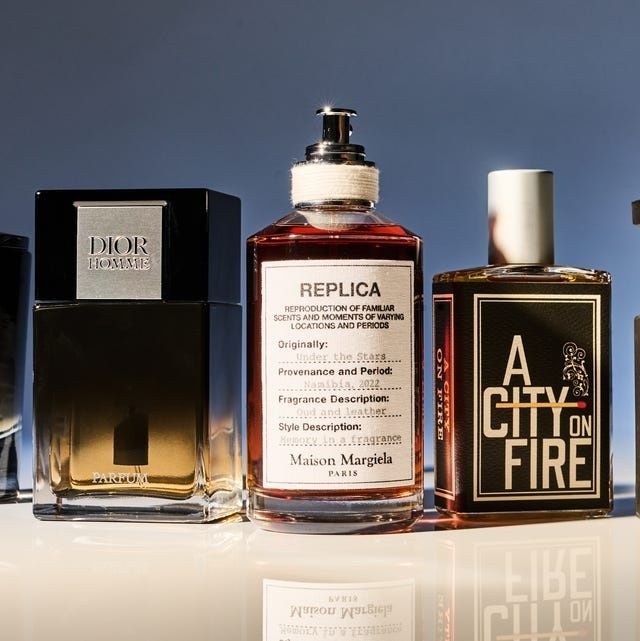
Thermodynamics and Molecular Volatility in Cold Air
Fragrance is a carefully balanced mixture of volatile organic compounds dissolved in alcohol, oil, or both. After application, some molecules move from the liquid film into the air, where they reach the nose and create the impression of projection. Temperature strongly influences this process. In colder conditions, molecules possess less kinetic energy, so the transition from liquid to vapor slows. The result is often greater longevity but a smaller diffusion radius.
This explains why bright citrus, green, and herbal openings can feel subdued in winter. Materials such as bergamot, lemon, grapefruit, mint, and certain aromatic herbs are comparatively volatile. They are designed to appear early and create lift, but cold air can delay their evaporation or keep their aroma close to the application site. A fragrance may therefore smell smoother and denser than expected, with the top notes failing to form the airy sillage cloud that develops more readily in warm weather.
Understanding how various fragrance tiers behave begins with analyzing the traditional structure of a note in perfumery and its chemical volatility. The familiar division into top, heart, and base notes is a useful guide, although real formulas evaporate continuously rather than in perfectly separated stages. A helpful overview of this traditional structure appears in this Authoritative Source.
| Fragrance tier | Typical materials | Winter behavior |
|---|---|---|
| Top notes | Citrus, mint, light herbs | Evaporate slowly and may remain close to the skin before fading |
| Heart notes | Lavender, spices, florals, aromatic woods | Provide the main character and often develop steadily in cool air |
| Base notes | Cedar, vetiver, resins, tobacco, amber | Remain persistent and contribute most strongly to winter longevity |
Molecular weight is part of the explanation, but it is not the only factor. Shape, polarity, vapor pressure, solubility, and the way materials are blended all influence evaporation. A lighter molecule is not automatically weak, and a heavier one is not automatically powerful. Still, dense woods, balsams, musks, and resins generally evaporate more slowly than citrus materials, which makes them dependable anchors when the weather suppresses radiance.
Skin Barrier Dynamics and Transepidermal Moisture Loss
Winter changes the surface on which fragrance must perform. Cold wind strips moisture from exposed skin, while indoor heating lowers relative humidity and increases the sensation of tightness. Together, these conditions can raise transepidermal water loss, the movement of water from deeper skin layers through the epidermis and into the surrounding air. The stratum corneum, the outermost layer of skin, relies on an organized mixture of ceramides, cholesterol, and fatty acids to limit that loss.
That lipid matrix also affects fragrance. Many perfume materials are lipophilic, meaning they interact readily with oils. On well-conditioned skin, these compounds can remain within a thin, flexible surface film and release gradually. Dehydrated skin offers a less accommodating environment. Its rougher keratin structure can absorb part of an alcohol-based spray quickly, while the damaged or depleted lipid layer provides less support for controlled diffusion. The fragrance may last in traces but project less effectively.
Available clinical literature on the relationship between hydration and epidermal permeability can be consulted through this clinical skin-barrier resource. The specific fragrance experience will vary by formula and individual skin chemistry, but the practical principle is sound: maintaining the barrier creates a more stable surface for scent.
- Apply a fragrance-free moisturizer before perfume, allowing it to settle for several minutes.
- Choose creams with barrier-supportive ingredients such as glycerin, ceramides, or squalane when skin feels tight.
- Avoid applying fragrance immediately after aggressive exfoliation, shaving irritation, or very hot bathing.
- Increase application thoughtfully rather than compensating for dry skin with excessive spraying.
Moisturizer does not transform a delicate cologne into an extrait, but it can improve the consistency of wear. Oily skin often retains fragrance more effectively because its surface film slows evaporation. Dry skin tends to release alcohol and volatile materials quickly, especially in low-humidity interiors. A simple barrier-repair ritual therefore has a more dependable effect than repeatedly reapplying a fragrance that was never given a stable surface.
Why Base Notes Thrive Under Heavy Winter Skies
Winter gives dense materials room to speak with composure. Vetiver, cedar, tobacco, labdanum, leather, amber, and other resinous accords contain materials that are generally less volatile than bright citrus or green notes. Sesquiterpenes, which are found in many woods and roots, contain larger molecular structures than the monoterpenes common in citrus oils. Resins also contain complex, slow-moving aromatic compounds that contribute persistence and texture.
In warm weather, these materials can become expansive quickly. A rich amber or balsamic accord may feel excessive when heat accelerates evaporation and humidity amplifies projection. Cold conditions moderate that release. Dense molecules unfold more slowly, allowing smoky, woody, spicy, and sweet facets to develop without immediately overwhelming the surrounding space. The effect is less a sudden burst than a controlled aura, which suits tailored winter clothing and enclosed social settings.
The distinction between longevity and projection matters here. A resinous fragrance may remain detectable for many hours while projecting only a modest distance. In freezing weather, the diffusion radius can contract even as wear time increases. Close inspection may reveal a nuanced scent trail around the collar, scarf, and sleeves rather than a broad cloud that announces itself across a room. That restraint is often an advantage, particularly in offices, restaurants, and public transport.
- Woods provide dryness, structure, and a polished masculine frame.
- Resins add warmth, depth, and a gently balsamic persistence.
- Tobacco and leather accords create texture that pairs naturally with wool, flannel, and brushed cotton.
- Spices restore lift when citrus openings feel muted, especially cardamom, pepper, cinnamon, and clove in measured doses.
- Vetiver and cedar keep heavier compositions tailored rather than syrupy.
Concentration also deserves attention. Eau de parfum and extrait formulas generally contain more aromatic material than eau de toilette or eau de cologne, though concentration alone does not determine quality or projection. A well-designed eau de toilette can perform beautifully in the cold if its structure includes suitable woods, spices, or fixatives. The most reliable approach is to assess the complete formula, then adjust the number and placement of sprays according to the setting.
Textile Adsorption on Cashmere, Wool, and Flannel
Clothing changes fragrance performance because fabric is not a smooth, living surface like skin. Cashmere and wool are made from animal fibers with microscopic scales and irregular spaces. Flannel, depending on its fiber and weave, presents a raised, brushed surface that can retain aromatic material. These structures create pockets where heavier molecules settle and release gradually as the garment moves and warms.
Natural lanolin associated with wool fibers can also interact with oily fragrance materials, although the amount varies according to processing and finishing. The key point is physical rather than mystical: porous or textured fabrics provide more surface area than epidermis. A scent applied to a scarf, jacket lining, or wool sweater may last longer than the same scent applied to dry skin, but it can also project unevenly and remain present after the wearer expects it to disappear.
- Test first. Apply one small spray to an inconspicuous area of fabric before treating a visible garment. Alcohol, oil, colorants, and natural materials can react unpredictably.
- Prefer the inner surface. The underside of a scarf, the lining of an overcoat, or the interior of a sweater can create a discreet scent trail without placing liquid directly on the outer face.
- Keep fine suiting at a distance. Spray into the air and walk through the mist, or apply fragrance to skin beneath the jacket, rather than saturating silk, cashmere, or delicate tailoring.
- Use restraint. Fabric holds aroma tenaciously. One measured spray can be more effective than several applications that become cloying in a heated room.
- Wash and rotate thoughtfully. Scent can accumulate on scarves, collars, and knitwear, causing different fragrances to mingle over time.
Hair and textiles can extend longevity, but neither should replace proper skin preparation. The most refined result usually comes from a restrained combination: moisturized skin for gradual diffusion, one or two pulse-point applications, and perhaps a discreet textile application when the garment allows it. Avoid spraying directly onto pale cashmere, silk, untreated leather, or expensive suiting unless the manufacturer confirms that the material is safe.
Refining Your Cold Weather Scent Strategy
Winter fragrance performance is the product of three interacting systems. Lower kinetic energy slows molecular evaporation and reduces projection. Dehydrated skin alters the lipid environment that helps fragrance oils diffuse. Heavy fabrics then adsorb aroma compounds, extending wear while changing the shape of the scent trail. Once these forces are understood, a quieter winter fragrance no longer feels disappointing. It becomes a different, more intimate expression of the same composition.
Build the cold-weather ritual around preparation and proportion. Repair the skin barrier with an unscented moisturizer, select a base-forward fragrance with woods, resins, tobacco, vetiver, or carefully balanced spice, and apply it with the discipline appropriate to the room. Let wool and cashmere carry a subtle trace rather than a saturated cloud. Winter is not a season in which fragrance disappears; it is the season in which complexity can unfold slowly, close to the body, with the same tailored restraint that defines a well-considered wardrobe.