
The Art of Neckline Balance: Matching Collar Spreads, Lapels, and Tie Knots
The Geometry of the Neckline and the Upper Torso
In tailored menswear, the eye naturally settles on the upper chest. The collar frames the face, the tie occupies the central vertical line, and the lapels create the jacket”s strongest directional movement. Together, these elements establish the first impression of proportion before fabric, pattern, or accessories have a chance to speak. A suit can be beautifully made and still feel unsettled if its neckline lacks coherence.
Elegant dressing is therefore less about obeying isolated rules than understanding relationships. Collar point spread, lapel breadth, and tie-knot volume form a visual triad. Each dimension affects the others, and the best result comes from treating the neckline as a small architectural composition. The aim is not mathematical uniformity, but a convincing balance between the wearer”s face, neck, shoulders, chest, and the scale of the garments.
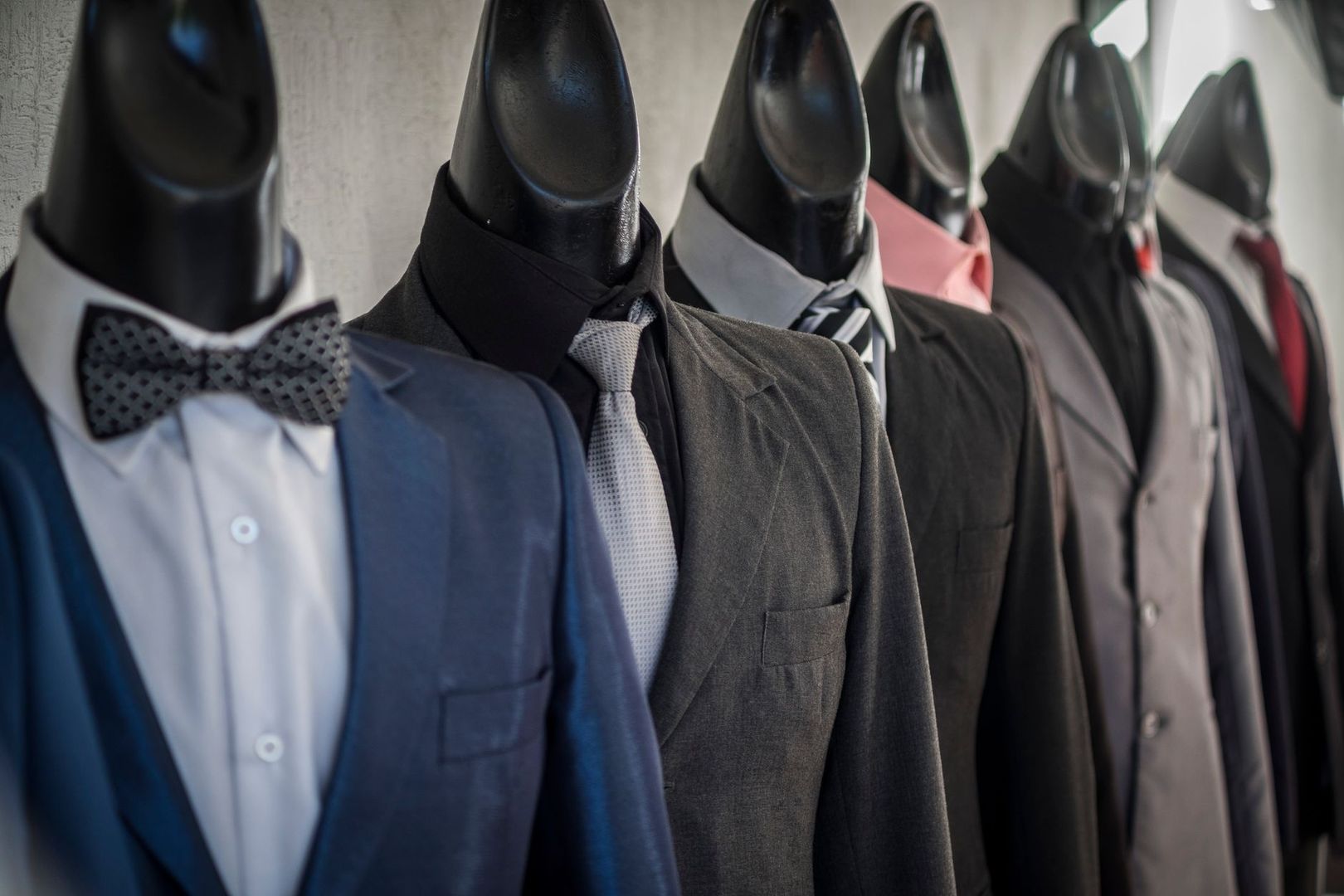
The Anatomical Blueprint Framing Your Face
A shirt collar is not merely a finishing detail. It is the immediate frame around the face, which means its scale and shape should respond to the wearer”s anatomy. Neck height, jawline angle, head size, and facial breadth all influence the amount of structure required. A long neck often benefits from a taller collar band, while a shorter neck generally looks cleaner with a lower band that does not visually compress the throat.
Facial geometry is equally important. A long, angular face can be balanced by a semi-spread or cutaway collar, whose horizontal emphasis provides visual breadth. A rounder or broader face often benefits from a point collar, particularly one with longer, narrower points that introduce a subtle vertical direction. These are not rigid commandments. They are starting points for observing whether the collar frames the face gracefully or competes with it.
Traditional collar construction explains why some shirts remain composed while others collapse around the neck. The collar band supports the base, interlining provides firmness or softness, and collar points determine the visible geometry. The broader history of the garment is explored in this Authoritative Source on collar architecture, but the practical variables remain straightforward:
- Collar point length determines how much vertical framing surrounds the face.
- Spread angle controls the horizontal openness of the neckline and the room available for a tie knot.
- Band height affects the apparent length of the neck and the authority of the collar.
- Construction and stiffness determine whether the points stand crisply, roll softly, or drift away from the jacket.
Collar scale should also correspond to the head and facial features. Smaller heads and finer features can be overwhelmed by a very large collar, while broader features may need a fuller frame to avoid making the shirt appear undersized. Made-to-measure construction becomes especially valuable when neck length, head scale, or facial proportions fall outside standard ready-to-wear assumptions.
Lapel Width and the Golden Ratio of the Torso
Lapel width establishes the jacket”s visual weight. Narrow lapels create a sharper, more streamlined effect, while broader lapels lend authority and a stronger vintage or traditional character. The correct choice depends partly on the wearer”s natural shoulder breadth and chest size. A very narrow lapel can look insubstantial on a broad frame, while an exceptionally wide lapel may dominate a smaller torso.
The most useful proportional guideline is to coordinate the widest visible part of the lapel with the widest blade of the tie. They need not be identical, but approximate similarity usually prevents either element from appearing isolated. A classic jacket with moderate lapels generally works best with a tie of standard width. A slimmer silhouette can support a narrower tie, provided the collar and knot are scaled accordingly.
Direct matching becomes less reliable when lapels are deliberately dramatic. An ultra-wide peak lapel paired with an equally expansive tie can create too much horizontal mass across the chest. In that situation, the tie should relate more closely to the shirt collar, with both collar and tie chosen in substantial but controlled proportions. This preserves the jacket”s statement without turning the center of the outfit into a visual contest.
Body scale matters as much as fashion context. Taller or broader men can generally carry wider lapels and fuller ties, while shorter or slimmer men often appear more balanced in moderate or slightly narrow proportions. Knit ties deserve the same scrutiny: a very skinny knit may look disconnected from a traditionally cut jacket, whereas a fuller knit can add texture without undermining the suit”s architecture.
Calibrating Knot Volume to Collar Openings
The knot should occupy the negative space between the collar leaves without forcing the points upward or leaving an awkward gap. A narrow collar calls for a compact, elongated knot. A wider spread offers room for a more triangular shape. The knot must also sit flat against the neck and chest; if the collar points lift away from the shirt, the problem is usually one of volume, tie length, or insufficient collar structure.
The Four-in-Hand is modest, slightly elongated, and versatile. It suits point collars, button-down collars, and narrower spreads, especially when the tie is textured or of moderate weight. The Half-Windsor provides a more triangular and symmetrical shape for medium spreads. The Full Windsor is larger and more formal, making sense with broad spread or cutaway collars, larger necks, and substantial fabrics. A practical tie masterclass on collar and knot selection offers a useful reference for these relationships.
- Lightweight silk usually benefits from a moderate knot, since excessive wrapping can appear thin or sharply compressed.
- Heavy silk, wool, or textured ties naturally create more volume and may require a simpler knot to avoid bulk.
- Thick interlining produces a fuller knot, while an unlined or lightly lined tie permits a softer, smaller result.
- Tie width and length must be considered together, since a large knot consumes more fabric and can leave the finished blade too short.
Fabric texture can behave like additional weight. A coarse grenadine, dense wool, or substantial knit may produce a fuller knot than its measured width suggests. A carefully formed dimple adds controlled depth beneath the knot, improving drape without requiring more bulk. The final test is visual: the knot should feel anchored between the collar points, not wedged into them.
The Harmony Matrix Across Classic Menswear Silhouettes
Different tailoring silhouettes call for different degrees of coordination. The table below offers a practical starting point rather than an inflexible formula. Measurements are approximate because collar construction, body scale, tie material, and personal preference can alter the final impression.
| Silhouette | Lapel width | Collar spread | Tie blade | Recommended knot |
|---|---|---|---|---|
| Classic balanced | 7.5 to 9 cm | Medium spread | 7.5 to 8.5 cm | Four-in-Hand or Half-Windsor |
| Modern slim | 6 to 7.5 cm | Point or narrow spread | 6 to 7.5 cm | Four-in-Hand |
| Assertive wide-spread | 9 to 11 cm | Wide spread or cutaway | 8.5 to 9.5 cm | Half-Windsor or Full Windsor |
The classic balanced pairing is the most adaptable for business, ceremonies, and investment wardrobes. It creates enough visual presence without tying the wearer to a particular decade. The modern slim pairing works best when the entire silhouette is consistent, including trouser line, shoulder structure, collar scale, and shoe profile. A narrow tie on a jacket with generous vintage lapels usually looks accidental rather than contemporary.
The assertive wide-spread combination can be highly elegant when the wearer”s frame supports it and the jacket is intentionally cut around the proportions. In more relaxed tailoring, softer collars and unstructured jackets may tolerate less formal knots, even when the lapels are moderately broad. Formality is therefore part of the matrix: a crisp white shirt, structured collar, smooth silk tie, and padded jacket demand more precision than an open-weave shirt, knitted tie, and soft blazer.
Mastering Your Personal Silhouette
The upper body should be assessed as one interconnected visual unit. The collar frames the face, the knot fills the center, and the lapels widen the composition toward the shoulders. When these elements share a credible scale, the result feels effortless. When one is dramatically smaller or larger, the eye notices the mismatch even if each individual garment is attractive.
A mirror check can turn abstract proportion into a repeatable dressing habit:
- Check that the collar band sits securely without choking or collapsing, and that the collar points remain close to the shirt front.
- Assess whether the knot fills the collar opening without lifting the points or leaving conspicuous empty space.
- Compare the tie”s widest blade with the jacket”s lapel breadth, allowing judgment when the lapel is exceptionally wide.
- Look at the face, neck, and shoulders together rather than evaluating the collar in isolation.
- Finish with the full outfit, checking that the fabric weight, formality, and silhouette belong to the same visual language.
Intentional styling does not require slavish adherence to one era or one formula. It requires awareness. Once collar spread, lapel breadth, knot volume, and anatomy are understood as parts of a single composition, experimentation becomes more intelligent. Trends may change, but a well-balanced neckline remains one of the most reliable signatures of polished personal style.