
Curating the Home Study: Principles of Practical Warmth and Bookcase Styling
The Antidote to Curated Perfection in the Modern Workspace
A home study should look lived in, not staged for a photograph. The most lifeless rooms are often the most meticulously arranged: books selected by spine colour, desks cleared of every useful object, and shelves composed as though no one has ever reached for a volume. Such arrangements may perform well on social media, yet they rarely support concentrated work, thoughtful reading, or the quiet pleasure of returning to a familiar room.
An authentic study has warmth, utility, and sensory character. It accommodates the practical rituals of professional life while leaving room for memory, discovery, and gradual change. A well-considered solid wood furniture collection can establish the room”s foundation, but the finished character should come from how the space is used. The editorial standard is simple: choose materials that reward touch, lighting that supports the eyes, and objects that possess either purpose or meaning.
Mastering the Hierarchy of Light Across Your Study
Lighting is the first architectural decision in a study because it determines how every other element is perceived. A room with one bright ceiling fixture tends to flatten its furniture and create harsh contrast across the desk. A more sophisticated scheme uses three layers. Ambient illumination establishes a calm base, task lighting directs useful brightness toward reading and writing, and accent lighting gives depth to shelves, artwork, and architectural details.
Warmth matters, but warmth should not become murkiness. Bulbs between 2400K and 2700K generally create a welcoming, library-like atmosphere, particularly in the evening. A desk lamp should be positioned to avoid casting the writing hand”s shadow across the page, while a reading lamp should illuminate the book rather than the reader”s eyes. Dimmability is especially valuable, allowing the room to move from alert daytime work to slower evening reading without changing its entire character.
Light also has a physiological dimension. Research into the indoor light environment indicates that spectrum, intensity, timing, and exposure can influence visual comfort, alertness, and circadian regulation. The available biomedical discussion in research on light and biological balance is a useful reminder that decorative decisions should not be separated from bodily needs. In practice, the most refined study supports concentration during working hours and avoids excessive glare or stimulating brightness late at night.
- Use diffuse ambient light to prevent severe contrast between the desk and surrounding walls.
- Choose an adjustable task lamp with a shade that controls glare.
- Add low-level shelf or picture lighting to create depth without competing with the desk.
- Use daylight intelligently, placing screens perpendicular to windows where possible.
- Install dimmers so the room can shift naturally between work, conversation, and reading.
Selecting Hardwoods and Heritage Craftsmanship for Lasting Presence
Wood gives a study its emotional temperature. Solid walnut offers deep brown colour, expressive grain, and a naturally formal presence. White oak is lighter, more open in texture, and particularly effective when the room needs an architectural sense of air. Synthetic veneers can be attractive and practical when carefully made, but they should not be confused with the structural depth and repairability of solid timber. Particle board and MDF may serve economical applications, yet they typically communicate a different level of permanence.
Heritage craftsmanship is visible in details that do not demand attention. Look for clean grain transitions, stable proportions, restrained overhangs, tapered legs, and joinery that appears deliberate rather than concealed through excessive ornament. Mortise-and-tenon construction, for example, is valued because it creates a strong mechanical connection between pieces of wood. A natural oil or wax finish can preserve tactile warmth while allowing the surface to develop patina through use. The appeal is not pristine perfection; it is the gradual evidence of care.
The Zen principle associated with the enso, or imperfect circle, offers a useful design attitude. A room becomes more convincing when it accepts variation, including a slight difference in grain, a softened edge, or the marks acquired by a desk over years of work. The following comparison clarifies the distinction between enduring woodwork and mass-market convenience.
| Feature | Timeless woodwork | Mass-market build |
|---|---|---|
| Material | Solid walnut, oak, or another carefully selected hardwood | Veneer, composite board, or mixed materials |
| Construction | Visible logic, strong joinery, and repairable components | Fast assembly with concealed hardware and limited repair options |
| Surface | Oil or wax that develops a tactile patina | Uniform coating designed primarily for immediate consistency |
| Character | Subtle variation and evidence of handwork | Standardized appearance across repeated units |
| Longevity | Designed to remain useful and attractive through changing interiors | Often selected for price, speed, or short-term convenience |
Structuring Bookcases with Architectural Purpose and Organic Ease
A bookcase should be planned like a small piece of architecture rather than filled at random. Begin by identifying zones: reference material near the desk, frequently used books at comfortable hand height, archives in less accessible locations, and personal objects where the eye can pause. This creates a hierarchy of use. It also prevents the common mistake of arranging every shelf with equal intensity, which makes an entire wall feel visually loud.
Variation brings ease, but variation must be controlled. Vertical rows provide rhythm and efficient storage, while horizontal stacks introduce a quieter line and create useful platforms for small objects. Negative space is not wasted capacity. It gives the eye relief, allows a treasured object to register, and makes future additions possible. Bronze bookends, framed sketches, ceramics, and inherited pieces work best when distributed rather than clustered into a single decorative display.
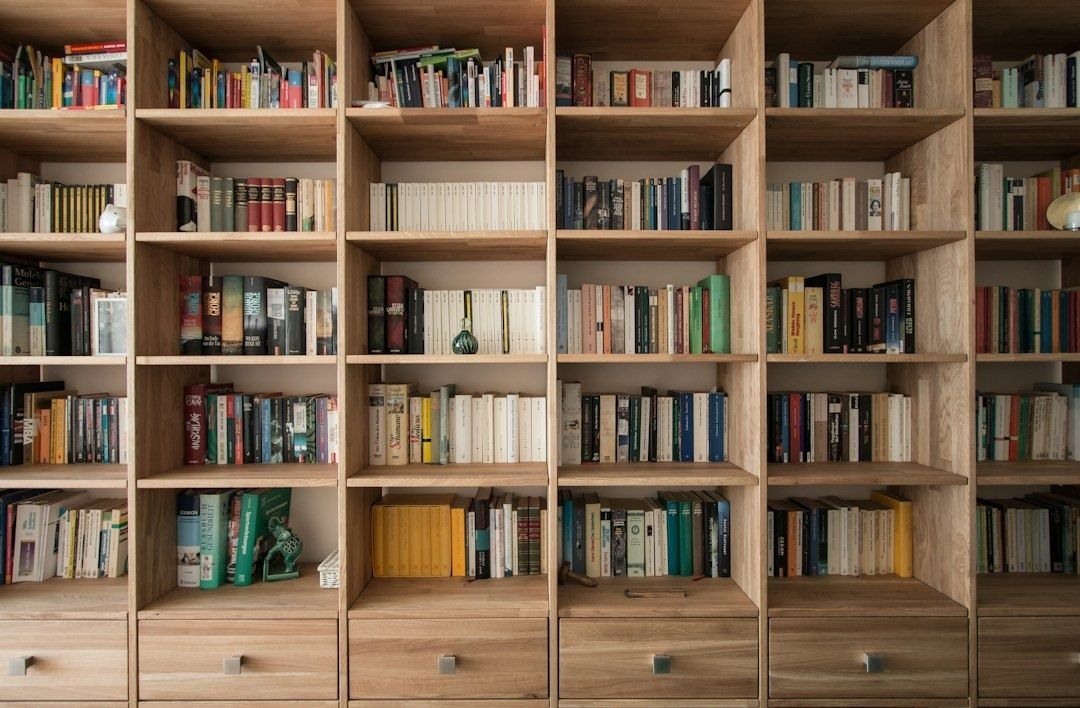
The principle resembles the disciplined hierarchy used in technical planning. The LADOT Technical Reference Library organizes standards, requirements, guidelines, and reference materials according to authority and application. A home bookcase does not require legal hierarchy, of course, but it benefits from the same clear thinking: establish the primary structure first, then introduce supporting elements without allowing them to compete with the whole.
- Measure the wall, shelf depth, and clearance around doors, radiators, and furniture before buying or building.
- Assign broad categories to different zones, keeping daily-use books within comfortable reach.
- Place the largest and heaviest volumes low, where they provide visual and physical stability.
- Alternate vertical groups with a few horizontal runs, leaving deliberate breathing space.
- Add sentimental objects sparingly, ensuring each piece has room around it and a reason to remain.
Establishing an Inviting Reading Nook for Daily Respite
A reading nook should invite a pause without becoming a decorative prop. Choose a chair with genuine lumbar support, a seat angle that keeps the head comfortably balanced, and enough width to accommodate changing positions. A handsome silhouette is valuable, but comfort determines whether the chair becomes part of daily life. Upholstered lounge chairs, well-made leather armchairs, and compact reading seats can all succeed when their proportions suit the reader and the room.
Textiles add the tactile richness that hard shelving and polished desks cannot provide. A wool throw introduces weight and warmth, velvet contributes depth, and a leather cushion or footstool brings a durable, quietly masculine accent. Keep the palette restrained, allowing texture to create interest rather than relying on loud pattern. A nearby side table should be large enough for a cup of coffee, a notebook, reading glasses, and a pencil, but not so large that it interrupts movement through the room.
- Test the chair with a real book, not merely by judging its appearance.
- Place the reading light slightly behind and to the side of the shoulder.
- Keep the side surface within easy reach without forcing the body to twist.
- Use a tray to contain stationery, spectacles, and small writing tools.
- Choose textiles that can be cleaned, repaired, and enjoyed rather than treated as untouchable decoration.
Cultivating a Room that Grows Alongside Your Intellect
The strongest home studies are assembled gradually. Resist the urge to purchase an entire room in one afternoon, particularly when doing so produces a collection of matching pieces with no personal history. Begin with the desk, chair, and lighting required for serious use. Add shelving according to the books actually owned, then allow art, objects, and textiles to arrive through travel, inheritance, commissions, and considered discoveries.
Honest wear is part of the room”s authority. A softened leather arm, a walnut surface polished by years of writing, and a shelf of volumes with annotated pages communicate more than a flawless arrangement ever could. Build with restraint, maintain what deserves care, and let the study become a record of attention. Quiet distinction is not achieved through performance; it emerges when useful things are chosen well and given time to become yours.