Deconstructing the Straight Razor Shave: Patience as Modern Grooming
Reclaiming the Morning Through the Art of the Cut Throat
Modern grooming is often designed around speed. Disposable multi-blade cartridges, aerosol foam, and electric trimmers promise a faster face, yet convenience can reduce shaving to a hurried, friction-laden chore performed while the mind is already occupied by messages, meetings, and traffic. The result may be technically clean, but the experience is rarely composed. The hand moves automatically, the face is treated as a surface to clear, and the morning begins in a state of quiet reaction.
The straight razor offers a more intentional alternative. Its exposed edge demands attention, while warm water, dense lather, controlled movement, and the soft scrape of steel return grooming to the senses. Traditional wet shaving takes longer because it asks more of the person holding the tool. That is precisely its value. A deliberate shave can establish a calmer personal tempo before the day becomes digital, crowded, and externally directed. Patience is not an inconvenience here. It is the method.
The Philosophy and Anatomy of an Enduring Edge
A straight razor carries a particular kind of historical weight. Its carbon steel blade is not designed to be discarded after a short cycle of use, nor is its handle merely packaging for a consumable mechanism. Properly maintained, a well-made razor can serve for decades and, in some cases, pass between generations. That longevity stands in marked contrast to planned obsolescence, where plastic cartridges are manufactured to be replaced repeatedly, often before the underlying handle or shaving system has lost its usefulness.
This does not make the straight razor automatically superior for every face or every schedule. It does, however, change the relationship between user and object. The tool rewards care, inspection, and technique. A razor becomes sharper through appropriate honing, remains aligned through stropping, and performs best when its owner understands how steel behaves against skin. When evaluating your long-term grooming investments, mastering traditional tools will transform everyday hygiene into an intentional ritual.
The anatomy of the blade also matters. A full hollow grind removes more steel from the blade”s sides, creating a flexible edge with a distinctive singing sound and a responsive feel. It can offer excellent feedback, although that flexibility may be less forgiving for an inexperienced hand. A wedge grind retains considerably more steel and feels weightier and steadier on the face. Between these extremes are half-hollow and quarter-hollow designs, which balance rigidity and responsiveness. Blade width, spine thickness, handle material, and overall balance all affect control.
- Full hollow grind: light, flexible, and highly responsive.
- Half-hollow grind: a versatile balance between feedback and stability.
- Wedge grind: substantial, rigid, and reassuring for those who prefer a weightier stroke.
- Balanced construction: allows the fingers to guide the razor without gripping it defensively.
The economics are similarly considered. A quality razor involves a meaningful initial investment, but it does not require a constant stream of replacement cartridges. Shaving soap, a brush, and maintenance supplies can also last considerably longer than aerosol products and disposable systems. The ecological benefit should not be overstated, since manufacturing and maintenance still have an impact, but reducing repeated plastic and metal waste is a practical advantage. The most refined purchase is often not the cheapest item today, but the one that remains useful tomorrow.
Preparing the Canvas with Heat Water and Bristles
Preparation determines whether a straight razor feels controlled or precarious. Warm water softens the outer structure of facial hair, making the whisker easier to sever and reducing the force required at the point of contact. A hot towel or warm shower also relaxes the skin and creates a more receptive surface. The familiar language of “opening pores” is imprecise, since pores do not open and close like doors, but heat does soften sebum and hair while increasing surface comfort. The practical effect is what matters: the beard becomes more manageable.
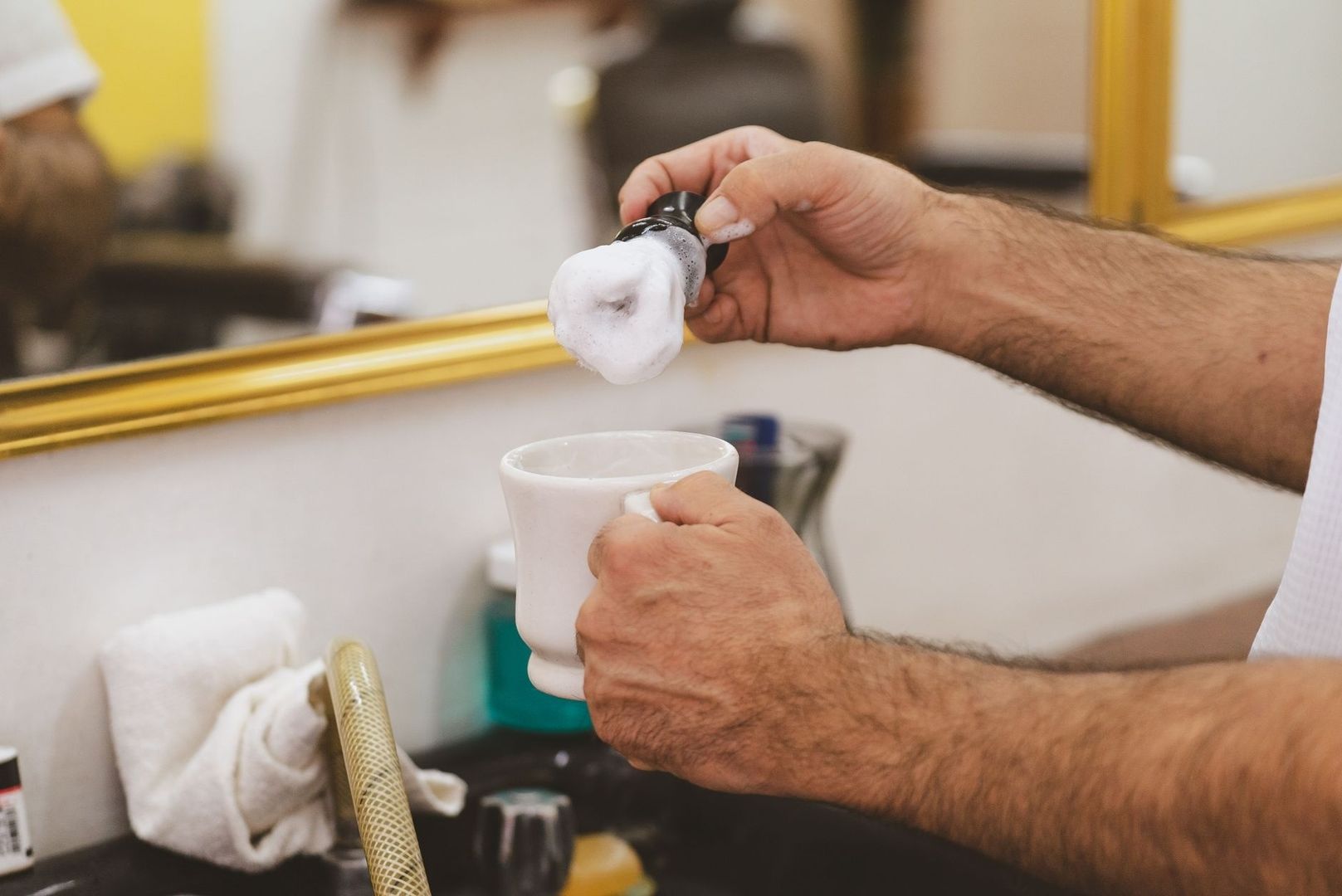
The brush then builds the protective architecture of the shave. A badger brush holds water effectively and works shaving soap into a dense, hydrated lather. Synthetic brushes can provide similar performance while drying quickly and offering consistent resilience. The lather should be creamy and stable, not a mound of dry bubbles. It cushions the skin, helps the blade glide, and lifts the hairs slightly so they meet the edge cleanly. By comparison, canned foam is convenient but often feels lighter and less substantial, offering less control over hydration and texture.
| Preparation element | Modern dry or cartridge habit | Classic wet shave approach |
|---|---|---|
| Hair preparation | Minimal or absent | Warm water softens the beard |
| Lubrication | Thin gel, foam, or none | Hydrated soap lather with cushion |
| Application | Hands or direct from the can | Brush works lather into facial hair |
| Blade control | Cartridge safety features do much of the work | Angle and pressure remain under direct control |
| Time required | Fast and functional | Slower, deliberate, and repeatable |
The distinction between methods is not merely nostalgic. A comparison of wet and dry shaving methods reveals why hydration is essential for comfort. Wet shaving can provide smoother glide and a close result, though it introduces a greater possibility of nicks when technique is careless. The objective is not to create an elaborate ceremony for its own sake. It is to give the skin and hair the conditions required for a precise, low-friction pass.
The Geometry of Shaving and Edge Alignment
The straight razor is governed by geometry, not force. A working angle of approximately thirty degrees is a useful starting point, formed by the blade”s relationship to the skin rather than by a rigid measurement. Too shallow an angle may fail to cut efficiently and encourage repeated passes. Too steep an angle can scrape the surface, producing razor burn or a deeper nick. The correct position is discovered through sound, resistance, and the quality of the cut.
Pressure should remain close to zero. The blade is already keen, and the razor”s own weight should provide most of the downward force. Pressing harder does not make the edge more effective; it simply increases the likelihood of irritation. Stretching the skin gently with the free hand creates a flatter path and helps prevent the edge from catching on folds. Areas such as the upper lip, jawline, and corners of the mouth require shorter strokes and heightened attention.
- Map the grain: run the fingertips across the beard and note where the hair feels smooth and where it resists.
- Begin with the grain: use short, controlled strokes to remove the bulk of the growth with minimal irritation.
- Re-lather before changing direction: never make a second pass over dry or inadequately protected skin.
- Move across the grain: refine the result gradually while preserving the skin”s comfort.
- Consider against-the-grain work carefully: reserve it for areas that tolerate it and only when a closer finish is genuinely necessary.
Growth patterns are rarely symmetrical. One cheek may permit a straightforward downward pass, while the neck may grow sideways or in small whorls. Treating the entire face as a single map encourages irritation. A calculated shave reads the terrain instead. The most polished result is not always the absolutely closest one. It is the result that looks clean while leaving the skin calm, even, and presentable several hours later.
The Rhythm of the Strop and Steel Preservation
Stropping is the maintenance ritual that keeps the razor ready between honing sessions. A leather strop does not sharpen the blade in the same way a hone does. Instead, it helps realign microscopic irregularities along the edge and polishes the steel. A canvas side can remove residue, provide a slightly different finishing surface, and help keep the blade clean. The strop must be held under even tension, since a loose surface can allow the edge to roll rather than align.
The movement is simple but exact. The spine leads the blade, the heel travels toward the toe, and the razor turns by rolling over its spine rather than lifting the edge from the leather. Repetition creates muscle memory, but haste defeats the purpose. The quiet back-and-forth rhythm is a small lesson in disciplined attention, much like the broader guidance on mindful morning routines, where consistent, manageable anchors are more effective than elaborate habits that cannot be sustained.
- Rinse the blade thoroughly after shaving.
- Dry the steel completely, especially around the pivot and tang.
- Apply a light protective oil when the razor will be stored for an extended period.
- Keep the razor open and dry rather than sealed while moisture remains present.
- Strop before use with controlled, spine-led passes and no downward force.
Carbon steel is beautiful because it is responsive, but that responsiveness includes a susceptibility to oxidation. Water left on the blade can create spots or corrosion, while careless storage can damage the edge. Maintenance should therefore be calm rather than fussy. A few attentive minutes preserve both performance and appearance. The ritual ends with a particular clarity: the tool is clean, the edge is prepared, and the next shave has already been made easier by today”s care.
Carrying Deliberate Mastery into the Modern Day
The straight razor demonstrates that luxury is defined less by speed than by allocated attention. A disposable cartridge may finish the task quickly, but a carefully prepared shave offers something more durable: tactile knowledge, sensory presence, and a visible standard of self-command. The finished face matters, yet so does the manner in which it was achieved. Calm movements, proper preparation, and restraint at the edge are all forms of personal presentation.
Adopting the straight razor also shifts the wearer from passive consumer to active custodian. The object is not used and discarded; it is selected, maintained, understood, and preserved. Set aside roughly twenty minutes when the morning allows, begin with warm water, keep the first strokes modest, and treat every session as practice rather than performance. In time, the ritual becomes less about mastering a dangerous-looking tool and more about mastering the pace at which the day begins. That is the quiet advantage of the cut throat: it makes patience visible, practical, and entirely your own.