
The Art of the Daily Drop: Why Every Man Needs a Valet Tray
The Architecture of the Threshold
Coming home is often treated as a transition of seconds, yet it can carry the accumulated fatigue of an entire day. A coat is removed, keys are set down, a watch comes off, a wallet disappears beneath the post, and a phone lands wherever the nearest flat surface happens to be. None of these actions is difficult, but together they create a small domestic negotiation at precisely the moment attention is depleted.
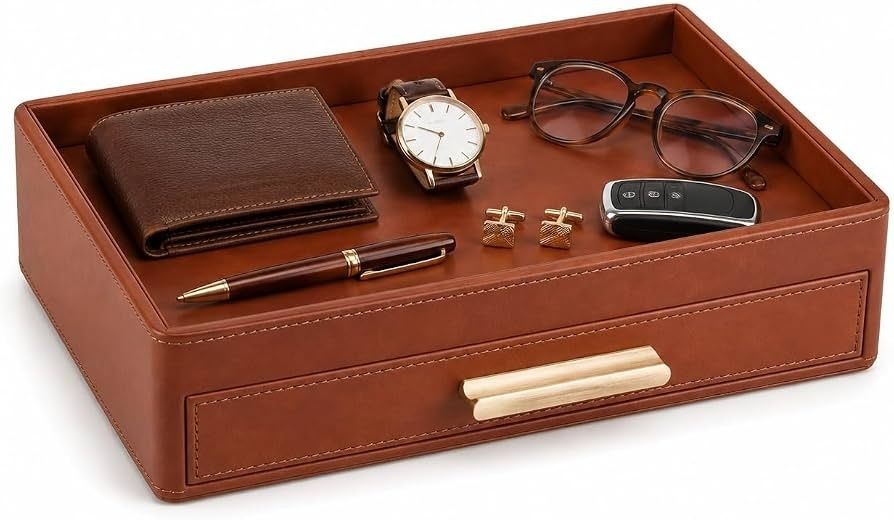
That disorder produces a quiet form of cognitive friction. The entryway becomes a visual inventory of unfinished decisions, and the next morning begins with a search rather than a departure. A valet tray changes the character of that threshold. Properly chosen and consistently used, it becomes an evening sanctuary for the objects that accompany you through the world, turning the daily drop into a purposeful ritual and giving fine accessories a considered place to rest.
The Domestic Psychology of Transit Points
Disorganization is rarely dramatic enough to command immediate attention, which is why it can be so persistent. A set of keys beside a receipt, a watch on a stone counter, and a wallet tucked beneath sunglasses create a field of minor visual prompts. Research and clinical commentary on clutter have associated persistent disorder with distraction, stress, impaired focus, and pressure on working memory. The issue is not that every room must look like a showroom. It is that objects without a designated destination continue asking the mind to account for them.
The idea of a dedicated personal station has deep precedent. Before modern wardrobes and built-in storage, men”s dressing rooms commonly relied on furniture designed for the orderly management of clothing and accessories. A traditional clothes valet and its history reflect the same principle as a contemporary catchall: garments and personal effects function better when their next location is decided in advance.
That principle is especially useful at transit points, the places where one mode of life becomes another. The foyer console, bedside table, or dresser is not merely furniture placement; it is behavioral architecture. When a tray sits exactly where a watch comes off and keys leave the pocket, the desired action requires almost no effort. Behavioral research on friction suggests that small changes in distance, time, and effort can meaningfully influence repeated habits. Good organization works because it makes the preferred behavior easier than improvisation.
- Place the tray within arm”s reach of the usual entry point.
- Give frequently carried objects a visible, stable position.
- Keep the surface selective rather than allowing it to become a general storage bin.
- Review the contents regularly and remove receipts, loose change, and obsolete cards.
The result is immediate calm, not because the day has become simpler, but because the first domestic decision has already been made. Crossing the threshold becomes a controlled release rather than another task.
Caring for Horology and Leather Craft
Fine accessories are durable, but durability is not the same as invulnerability. A mechanical watch may withstand regular wear while remaining vulnerable to sharp impacts, abrasive grit, and careless contact with granite, glass, or unfinished wood. Placing a watch face down on a hard counter can invite scratches to the crystal or case, while a metal bracelet can mark the surface beneath it. A softly lined tray creates separation between the timepiece and the household environment.
The same logic applies to leather. Full-grain and vegetable-tanned leather develop character through use, yet repeated contact with rough surfaces can create premature scuffing. Wallets and card holders also absorb oils and moisture from hands, pockets, and countertops. A dedicated catchall does not eliminate maintenance, but it reduces needless exposure and gives leather the chance to rest in a dry, predictable setting. Premium makers such as handcrafted leather accessory specialists emphasize the long-term value of full-grain construction, careful workmanship, and materials that age rather than simply deteriorate.
Material selection determines how well a tray performs. Bridle leather offers a firm, structured surface with a polished character; vegetable-tanned leather brings a natural finish that can deepen over time; brushed brass hardware adds strength and visual warmth without appearing overly decorative. A microfiber suede lining is particularly useful beneath watches, spectacles, fountain pens, and polished metal objects because it cushions contact and reduces the risk of fine surface marks.
| Tray material or feature | Best protective function |
|---|---|
| Full-grain leather | Creates a resilient surface that develops a distinctive patina |
| Vegetable-tanned leather | Offers a natural finish and gradual tonal depth with use |
| Microfiber suede lining | Cushions delicate objects and limits abrasive contact |
| Brushed brass hardware | Reinforces corners and closures while adding restrained polish |
| Raised tray edges | Prevent small essentials from sliding onto the floor or behind furniture |
Quality is also a question of proportion. A tray that is too shallow allows objects to escape, while one that is too large encourages accumulation. The ideal vessel accommodates the actual daily carry: watch, wallet, keys, eyewear, and perhaps a ring or pocket tool. Its purpose is protection through restraint, not storage without limits.
Designing the Evening Unload Sequence
An evening ritual becomes reliable when it is brief, repeatable, and arranged in a logical order. The goal is not ceremonial fussiness. It is to remove decisions from the tired portion of the day and ensure that every essential object is accounted for before sleep.
- Clear the active layer. Remove the phone, earbuds, and other digital devices first, placing them in a defined charging area separate from the tactile objects that remain in the tray.
- Set down the essentials. Place the watch, wallet, keys, and eyewear in their assigned positions rather than allowing them to form an undifferentiated pile.
- Inspect daily tools. Close a pocket knife, wipe away visible residue, and check a fountain pen for leaks or a loose cap before returning it to its place.
- Reset for departure. Confirm that cards, keys, and identification are present, then leave the tray visually clear enough to support a quick morning scan.
Separating digital devices from analog objects has a practical psychological benefit. The phone tends to extend the day through notifications, messages, and unfinished work. A watch, wallet, or pen has a different tactile language. Giving the phone a distinct charging position helps mark the end of active communication, while the tray becomes a quiet register of the physical tools required for tomorrow.
Small inspections prevent expensive or inconvenient failures. A fountain pen that is not capped properly can stain a pocket; a pocket knife with accumulated grit may require attention before its next use; a card left in a jacket can be forgotten when another jacket is selected. The tray makes these checks visible. Its value lies less in holding objects than in presenting them clearly enough to be noticed.
Over time, the sequence becomes automatic through environmental design. When every object has one obvious destination, misplaced keys become unusual rather than inevitable. The ritual also exposes excess. If a tray is consistently crowded with loyalty cards, coins, and miscellaneous packaging, that is useful information: the system needs editing, not a larger container.
How Spatial Clarity Solves the Morning Rush
Morning decision fatigue is often blamed on a lack of time, but the deeper problem is frequently a lack of visual certainty. Searching for a watch, checking three pockets for keys, or wondering whether a card was left in yesterday”s trousers consumes attention before the day has properly begun. An orderly station compresses those decisions into a single glance and replaces frantic retrieval with a controlled sequence.
Claims that a tidy surface will directly prevent a measurable cortisol spike should be treated cautiously. The supplied research material does not provide substantive findings from the linked biomedical article, and organized environments should not be presented as a guaranteed medical intervention. Still, established discussion of clutter and wellbeing associates persistent visual disorder with stress, distraction, and cognitive overload. For a careful overview of the research context, readers can consult this research article access page, while remembering that a browser interstitial alone does not substantiate specific findings.
The practical answer is tactile and immediate. Position the tray near the bedroom dresser or foyer console, select the watch, wallet, and keys in one motion, and leave the home with the assurance that preparation has already occurred. That brief sense of order matters before a presentation, a negotiation, or a demanding commute. Composure is not an abstract personality trait; it is often the visible result of having removed avoidable uncertainty.
A well-considered tray also complements the room rather than competing with it. Dark leather suits walnut and stained oak, lighter natural leather works with painted cabinetry and pale stone, and discreet metal details can echo drawer pulls or lamp bases. The station should look intentional when empty and useful when occupied.
Claim Your Territory of Everyday Composure
A valet tray is a modest object with an outsized effect. It protects a watch from careless contact, gives leather goods a cleaner resting place, and turns the evening return into a deliberate act of closure. More importantly, it creates a reliable boundary between the public day and the private home, allowing essential possessions to settle without allowing clutter to spread.
Choose a vessel that fits the scale of the room, respects the finish of the furniture, and accommodates the objects carried most often. Then test the daily drop ritual for one week without expanding its contents. The reward is not theatrical luxury. It is the quieter advantage of knowing where everything belongs, beginning each morning with a clear surface, a prepared carry, and the composed assurance of a man who has made order part of his everyday style.